Fall 2025 Speakers
 |
LectureNJIT AI & Data Science Stars Seminar Series Protein data bank: From two epidemics to the global pandemic to mRNA vaccines and Paxlovid Monday, November 3, 2025 Location: GITC 2121 |
Abstract: Structural biologists and the open-access Protein Data Bank (PDB) played decisive roles in combating the COVID-19 pandemic. Global biostructure data were turned into global knowledge, allowing scientists and engineers to understand the inner workings of coronaviruses and develop effective countermeasures. Two mRNA vaccines, initially designed with guidance from PDB structures of the SARS-CoV-1 and MERS-CoV spike proteins, prevented infections entirely or reduced morbidity and mortality for more than five billion individuals worldwide. Structure-guided drug discovery by Pfizer, Inc. (facilitated by PDB structures), initiated in the 2000s in response to SARS-CoV-1 and resumed in 2020, yielded nirmatrelvir (the active ingredient of Paxlovid) -- a potent, orally bioavailable inhibitor of the SARS-CoV-2 main protease. You’ve got to love the Protein Data Bank.
Stephen K. Burley is currently University Professor and Henry Rutgers Chair Professor in the Department of Chemistry and Chemical Biology at Rutgers University, Founding Director of the Institute for Quantitative Biomedicine, Director of the RCSB Protein Data Bank, and Director of the Rutgers Artificial Intelligence and Data Science Collaboratory. He is also a Member of the Rutgers Cancer Institute, Co-Leads the Cancer Pharmacology Research Program. From 2008 - 2012, he is a Distinguished Lilly Research Scholar in Eli Lilly and Co. Before joining Lilly, Burley was CSO and Senior VP of SGX Pharmaceuticals, a biotechnology company that went public in 2006 and was acquired by Lilly in 2008. Until 2002, Burley was the Richard M. and Isabel P. Furlaud Professor at The Rockefeller University and an Investigator in the Howard Hughes Medical Institute (HHMI). He has authored/coauthored more than 350 scientific publications. Following undergraduate training in physics and applied mathematics, Burley received his M.D. degree from Harvard Medical School and D.Phil. in Structural Biology from Oxford University. He trained in internal medicine at the Brigham and Women's Hospital in Boston and a postdoc with Gregory A. Petsko at MIT and Nobel Laureate (William Lipscomb) at Harvard. Burley co-founded Prospect Genomics, Inc., which was acquired by SGX in 2001. He is a Fellow of the Royal Society of Canada, the New York Academy of Sciences, the American Crystallographic Association, and The Protein Society.
 |
LectureNJIT AI & Data Science Stars Seminar Series Safe, Transparent, and Private: Tuesday, September 16, 2025 Location: GITC 2121 |
My T. Thai is a Research Foundation Professor, Nelms Endowed Chair Professor, and Associate Director of the Nelms Institute for the Connected World at the University of Florida. An IEEE Fellow and globally recognized leader in trustworthy AI and optimization, her research addresses critical challenges in today’s interdependent, complex systems and high-impact applications such as blockchain, network infrastructure, and healthcare. She has authored 7 books and over 350 publications, earning multiple best paper awards and shaping both the theory and practice of network science and machine learning.
Responding to the global call for responsible and safe AI, Prof. Thai is a pioneer in developing deep explanations for black-box ML models and defending against explanation-guided attacks—work recognized with the 2023 AAAI Distinguished Paper Award. That same year, she received the Web Science Trust Test-of-Time Award for her landmark work on combating misinformation in social media. Her earlier honors include the IEEE Big Data Security Women of Achievement Award (2022), the DTRA Young Investigator Award (2009), and the NSF CAREER Award (2010).
Prof. Thai has served as Program Chair for several leading IEEE conferences. She is currently Editor-in-Chief of ACM Computing Surveys—ranked #1 in Computer Science, Theory & Methods—and of the Springer Journal of Combinatorial Optimization, as well as editor of Springer’s Optimization and Its Applications book series.
Spring 2025 Speakers
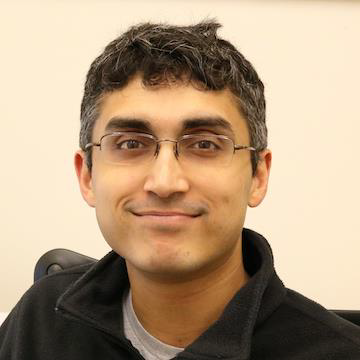 |
LectureTruth or Fiction: Robust Watermarking for Image Generation Models Chinmay Hegde, New York University Friday, May 2, 2025 (12:00PM – 1:00PM) Location: GITC 2121 |
Brief Bio:
Chinmay Hegde is an Associate Professor in the Tandon School of Engineering at NYU, jointly appointed with the CSE and ECE Departments. His research focuses on foundational aspects of machine learning (such as reliability, robustness, efficiency, and privacy). He also works on diverse applications of AI in engineering domains ranging from computational imaging, materials design, plant science, and cybersecurity. He is a recipient of the National Science Foundation's CAREER and CRII awards, two teaching awards, and ICML, SPARS, and MMLS best paper awards.
Abstract
GenAI tools that can mimic the appearance of people, scenes, and objects are now ubiquitous and cheap. For a variety of reasons, society urgently needs automated techniques that can distinguish between real versus fake images. One class of approaches for detecting AI-generated content relies on watermarking, which traces its roots to classical signal processing and forensics. In this talk, I will first revisit the basics of image watermarking. I will then describe two new watermarking approaches. The first approach (WIND) involves a distortion-free approach that embeds imperceptible, group-wise Fourier-domain watermarks using pseudorandom sampling. The second (SEAL) further improves robustness against forgery attacks by conditioning the watermark detection on the original images' semantic content. I will conclude with possible future directions.
The series is open to the public; no registration fee is required.
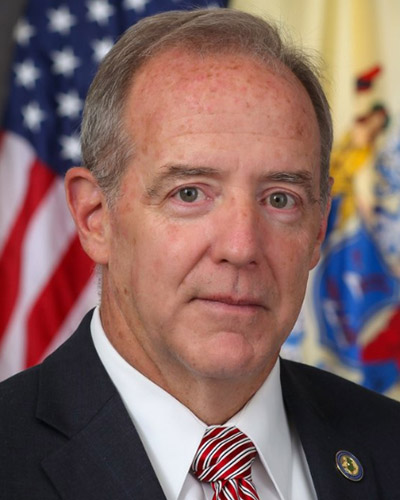 |
LectureThe Importance of Data Science for Cyber Security Michael Geraghty, Director of the New Jersey Cybersecurity Wednesday, Apr 9, 2025 (2:30PM – 3:30PM) Location: GITC 2121 |
Brief Bio:
Michael Geraghty is the State of New Jersey’s Chief Information Security Officer (CISO) and Director of the New Jersey Cybersecurity and Communications Integration Cell (NJCCIC). In these roles Director Geraghty is responsible for the development and execution of the State’s cybersecurity strategy. He is responsible for leading and coordinating New Jersey’s cybersecurity efforts while building resiliency throughout the State and has direct responsibility for all aspects of statewide cybersecurity operations; governance, risk and compliance; and incident response. Mr. Geraghty is an accomplished cybersecurity executive with a history of building innovative and model programs in private and public sector enterprises including roles as CISO of the Hudson’s Bay Company, Chief Information Officer of the National and International Centers for Missing and Exploited Children, Vice President of High Technology Investigations at Prudential Financial, and Network Intrusion Detection Manager, Lucent Technologies/Bell Labs. Mr. Geraghty began his career with the New Jersey State Police, where he served 12 years and led the formation and development of its High Technology Crimes Investigations Unit. He has provided expert testimony before the United States Congress and in federal, state, and international courts on computer crime investigations and forensics. Geraghty is a past president of the Northeast Chapter of the High Technology Crimes Investigation Association and has held leadership roles in the National Strategic Policy Council on Cyber and Electronic Crime.
The series is open to the public; no registration fee is required.
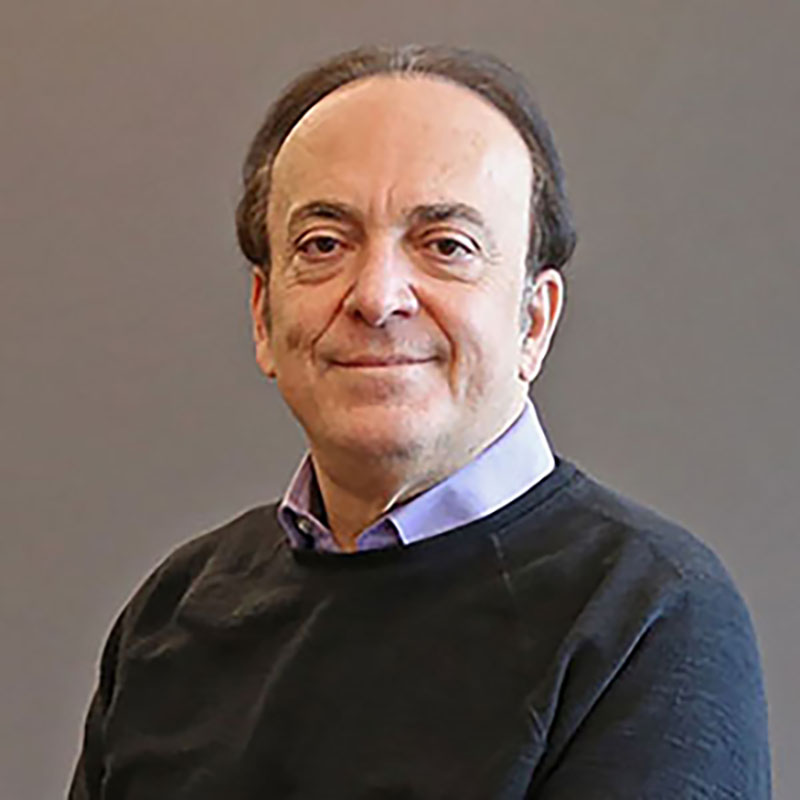 |
LectureAutomatic Discovery of Algorithms and Neural Architectures in Scientific Machine Learning George Em Karniadakis, Brown University April 7, 2025, 1 PM - 2 PM Location: GITC 2121 |
Brief Bio:
George Em Karniadakis is the Charles Pitts Robinson and John Palmer Barstow Professor of Applied Mathematics, Brown University; also with MIT& PNNL; a member of the National Academy of Engineering and a Vannevar Bush FacultyFellow. He received M.S. and Ph.D. from MIT in 1987. He was a Lecturer in the Department of Mechanical Engineering at MIT, and subsequently he joined the Center for Turbulence Research at Stanford/Nasa Ames, then Princeton University as Assistant Professor in the Department of Mechanical and Aerospace Engineering and as Associate Faculty in the Program of Applied and Computational Mathematics. H was a Visiting Professor at Caltech in 1993 and joined Brown University as Associate Professor of Applied Mathematics in the Center for Fluid Mechanics in 1994. After becoming a full professor in 1996, he continued to be a Visiting Professor and Senior Lecturer of Ocean/Mechanical Engineering at MIT. He is an AAAS Fellow (2018-), Fellow of the Society for Industrial and Applied Mathematics (SIAM, 2010-), Fellow of the American Physical Society (APS, 2004-), Fellow of the American Society of Mechanical Engineers (ASME, 2003-) and Associate Fellow of the American Institute of Aeronautics and Astronautics (AIAA, 2006-). He received the SES GI Taylor Medal (2024), the SIAM/ACM Prize on Computational Science & Engineering (2021), the Alexander von Humboldt award in 2017, the SIAM Ralf E Kleinman award (2015), the J. Tinsley Oden Medal (2013), and the CFD award (2007) by the US Association in Computational Mechanics.
Abstract
We will first review deep neural operators, which we will use as foundation models forscientific machine learning tasks. Then, we will design two classes of ultra-fast meta-solvers for linearsystems arising after discretizing PDEs by combining neural operators with either simple iterative solvers,e.g., Jacobi and Gauss-Seidel, or with Krylov methods, e.g., GMRES and BiCGStab, using the trunk basisof DeepONet as a coarse preconditioner. The idea is to leverage the spectral bias of neural networks toaccount for the lower part of the spectrum in the error distribution while the upper part is handled easilyand inexpensively using relaxation methods or fine-scale preconditioners. We create a pareto front ofoptimal meta-solvers using a plurality of metrics, and we introduce a preference function to select the bestsolver most suitable for a specific scenario. This automation for finding optimal solvers can be extended to neural architectures for predicting time series as well as to nonlinear systems and other setups, e.g. finding the best meta-solver for space-time in time-dependent PDEs.
The series is open to the public; no registration fee is required.
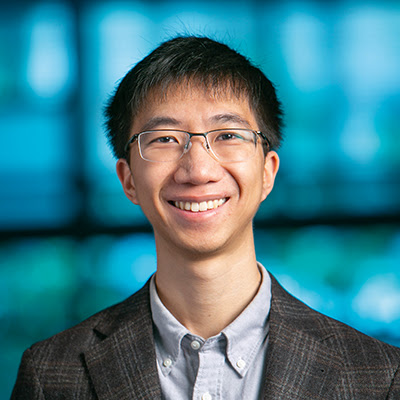 |
LectureConvincing Experts to (not) Trust ML Models Eric Wong, University of Pennsylvania March 14th, 2025, 11:30 am- 12:30pm Location: GITC 2121 |
Brief Bio:
Eric Wong is an Assistant Professor in the Department of Computer and Information Science at the University of Pennsylvania. He researches the foundations of robust systems, building on elements of machine learning and optimization to debug, understand, and develop reliable systems. He is a recipient of an NSF Early Career award and an AI2050 Early Career award.
Abstract
ML systems have a long history of being unreliable---should we trust these models today? In this talk, we will discuss the challenges and opportunities facing trustworthy machine learning. On the one hand, ML systems are prone to manipulation, as exemplified by our research on jailbreaks for large language models. We will show how this procedure can be generalized beyond safety to automatically find the weaknesses of large language models, a procedure called task elicitation. Conversely, ML systems may contain a gold mine of information waiting to be discovered, but conventional explanations lack reliability. We will show how to create explanations with practical yet provable guarantees in the language of experts, with applications in assisting real-time surgery and enabling new discoveries in cosmology.
The series is open to the public; no registration fee is required.
 |
LectureThe Usefulness of Fibonacci Codes Shmuel T. Klein, Bar-Ilan University |
Brief Bio:
Shmuel T. Klein is a Professor Emeritus and former Head of the Computer Science Department at Bar-Ilan University, near Tel Aviv. His main research interest is in Data Compression. He has published 2 books, more than 100 scientific papers, and several patents.
The Usefulness of Fibonacci Codes
The talk explores the sub-field of Data Science, considering the algorithmic aspects of data compression and coding. Several properties and applications of Fibonacci codes are presented. These are fixed codeword sets, using binary representations of integers based on the Fibonacci sequence rather than on powers of 2. Applications range from robust data compression, over faster modular exponentiation to boosting the compression performance of rewriting codes for flash memory. No previous knowledge is assumed.
The series is open to the public; no registration fee is required.
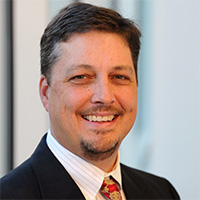 |
Inaugural LectureEmerging Legal |
Brief Bio:
David Opderbeck is Professor of Law and Co-Director of the Gibbons Institute of Law, Science & Technology and Institute for Privacy Protection at Seton Hall University Law School. His legal scholarship focuses on artificial intelligence, cybersecurity, data privacy, and intellectual property law. He develops and teaches innovative courses in technology law, including Cybersecurity Law and Policy, Artificial Intelligence and the Law, and a Data Privacy and Security Lab. He also leads the Law School's Data Privacy and Security Compliance Program. In the core law school curriculum, he has taught Property Law, Constitutional Law, and Torts. He is also a Faculty Associate with the Berkman-Klein Center for Internet & Society at Harvard University. Prior to his career in academia, Professor Opderbeck was a Partner in the Intellectual Property / Technology practice at McCarter & English, LLP, where he began practicing cyber and intellectual property law in the early years of the public Internet.
Emerging Legal Frameworks for AI
There is general consensus about some basic principles of AI ethics and policy, including transparency, fairness, explainability, privacy, security, and accountability. It is unclear how these broad goals could be incorporated into positive law. The European AI Act is the most prominent and extensive example of AI-specific law. It embodies a regulatory framework that is in many ways similar to the EU's General Data Protection Regulation (GDPR), which previously set the global pace for comprehensive privacy regulation. A number of U.S. states have enacted or are in the process of enacting AI laws, which are mostly issue- or sector-specific. During the Biden Administration, the U.S. Federal government began to develop policy positions relating to AI, but there has not yet been any sustained movement towards comprehensive legislation, and the incoming Trump Administrations priorities relating to AI are unclear. This talk will survey the existing legal landscape and highlight some difficulties policymakers face in this domain.
Learn more about our graduate programs:
M.S. in Data Science
Ph.D. in Data Science
M.S. in Artificial Intelligence
