 |
The Dr. Soon Ae Chun Memorial Seminar Series is dedicated to the memory of former professor and director of Information Systems and Informatics at College of Staten Island (CSI) and doctoral faculty member of computer Science at the Graduate Center (GC) of the City University of New York. She previously acted as director of the NSF sponsored Information Security Research and Education Lab (iSecure Lab) at CSI and was the recipient of the Fulbright Senior Scholarship and the CSI President’s Dolphin Award for Outstanding Scholarly Achievement. Dr. Chun’s most recent research projects included the policy issues in smart cities, the development of a cybersecurity ontology and a Linked Data of multi-modal cybersecurity educational data, and research on social data integration and analytics in the Healthcare domain.
 |
Second Annual Soon Ae Chun Memorial Lecture Clinical guideline-based decision support for clinicians and patients in the age of Machine Learning and AI: Wednesday, September 23rd, 2026 (2:15 PM - 3:30 PM) Location: GITC 2121 |
Brief Bio:
Dr. Mor Peleg is a Full Professor of Information Systems and Head of the Data Science Center at the University of Haifa. She is an internationally recognized expert in clinical decision support and biomedical informatics, with research focused on AI, Big Data, clinical guidelines, and personalized healthcare. She is Editor-in-Chief of the Journal of Biomedical Informatics and a Fellow of the American College of Medical Informatics and the International Academy of Health Sciences Informatics.
Abstract: My research focuses on developing methods that integrate domain knowledge with machine learning to support clinical decision-making. The source of clinical knowledge is evidence based clinical guidelines, and AI methods are used to provide personalize the clinical recommendations and their delivery. In this talk I will focus on a goal-based decision-support for clinicians managing multimorbidity patients and on a virtual coaching system, which we started to develop in the EU CAPABLE project. The coaching system aims at helping patients adhere to behavior change interventions (BCI) based on behavioral theory. Our proposed system predicts whether a patient will perform the targeted behavior (recommended by the clinical guideline) and uses counterfactual examples with feature control to guide personalization of BCIs. I will also present evaluation results of CAPABLE and preliminary work on incorporating AI to produce motivational messages to patients.
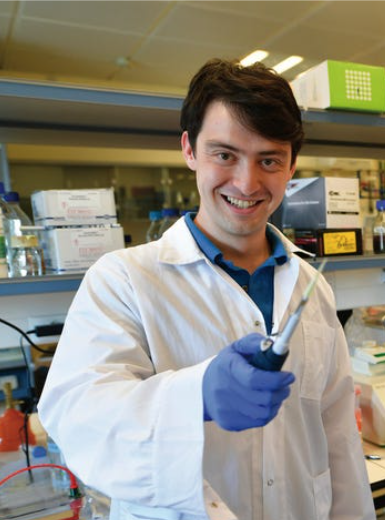 |
Soon Ae Chun Memorial Seminar Series Leveraging Predicted Protein Structures for Discovery and Design Monday, September 22, 2025 (1:00PM – 2:30PM) Location: GITC 2121 |
Brief Bio:
Dr. Alex Geller received a B.Sc. in Microbiology & Immunology from McGill University, an M.Sc. in Molecular Biology from Princeton University, and a Ph.D. in Bioinformatics from the Hebrew University of Jerusalem. He currently works in industry at Denovai, focusing on computational protein design. this lecture marks the inaugural event in the Soon Ae Chun Memorial Seminar Series.
Abstract: The advent of AlphaFold and related protein prediction tools has transformed bioinformatics, opening the door to discoveries that were previously out of reach. In the first part of this talk, I will share how structure-based approaches were applied to study the Type VI secretion system (T6SS), a molecular weapon bacteria use against competitors. By clustering proteins based on structure rather than sequence, we uncovered hundreds of new effector families, predicted their immunity partners, and validated novel pairs in the lab—showing how structural predictions can drive biological insight at scale.
The second part of the talk will shift to the emerging field of protein design, where the goal is not just to predict but to create. I will highlight how generative approaches—ranging from hallucination-style methods to diffusion models like RFdiffusion, and design frameworks such as AlphaDesign and BindCraft—are being used to build proteins with new functions. These approaches are rapidly moving from research to industry, with applications in therapeutics, enzymes, and beyond.
